Makes 1 16″ pizza
Dough ball size ~510g / 18oz
Time 15–20 min active + 1–3 days cold ferment
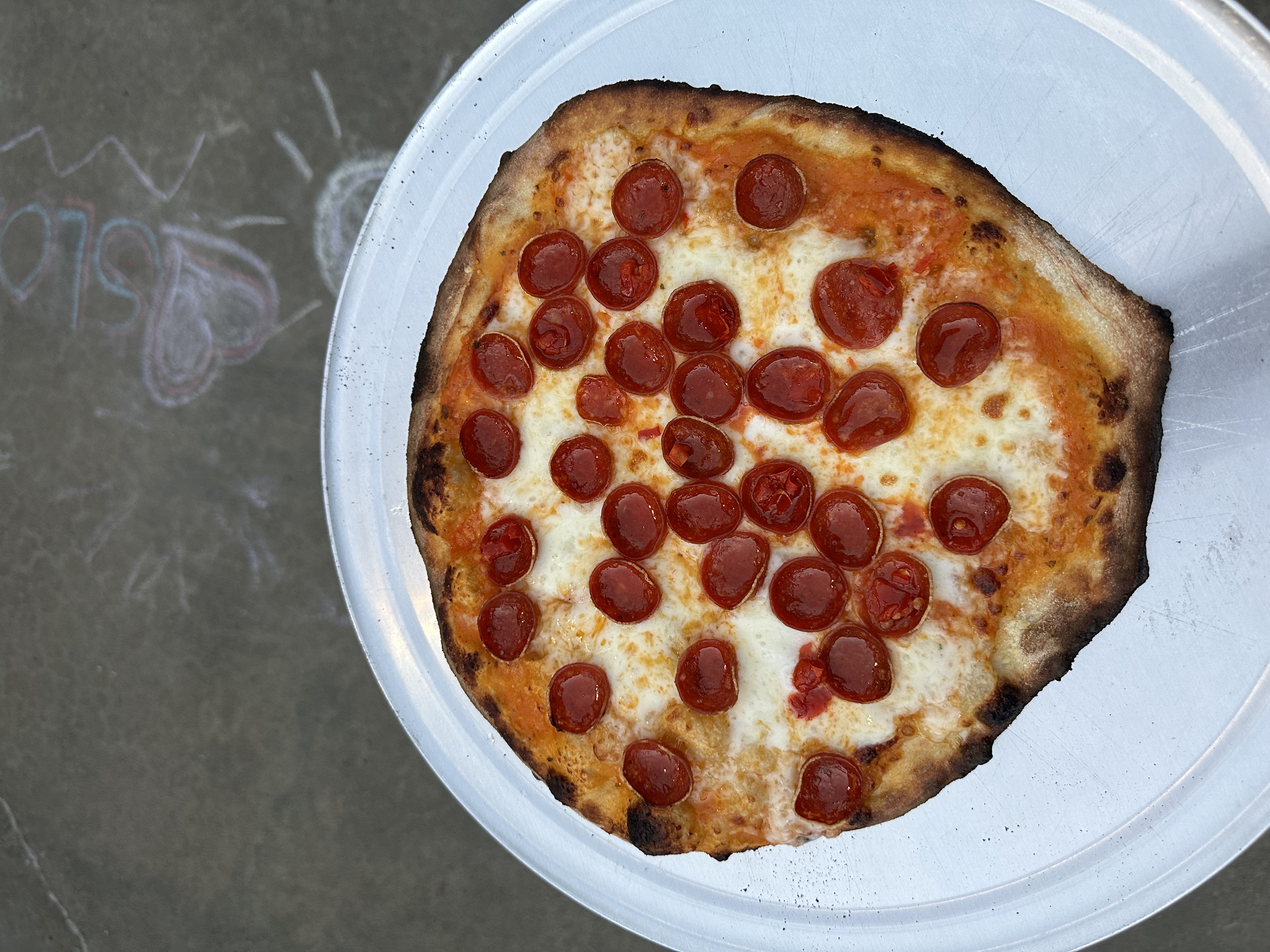
New Haven–style is my favorite type of pizza and the one that inspired me to get into pizza making once I moved to California. Compared to the New Haven / New York hybrid, it's thinner and crispier — and because it has more water in the dough, it's a little more challenging to shape and less forgiving on the peel. But when it works, the payoff is a deeply charred, crackling crust with a simplicity that's hard to beat.
I first had New Haven–style at Piece Pizzeria in Chicago around 2006. It stood out in a city dominated by deep dish and tavern-style — charred, full of flavor, and cut into irregular shapes rather than the clean even slices you'd expect. Years later, when visiting family in Connecticut for the holidays, I convinced my family to make the short trip to New Haven to try it, and soon a tradition was born.
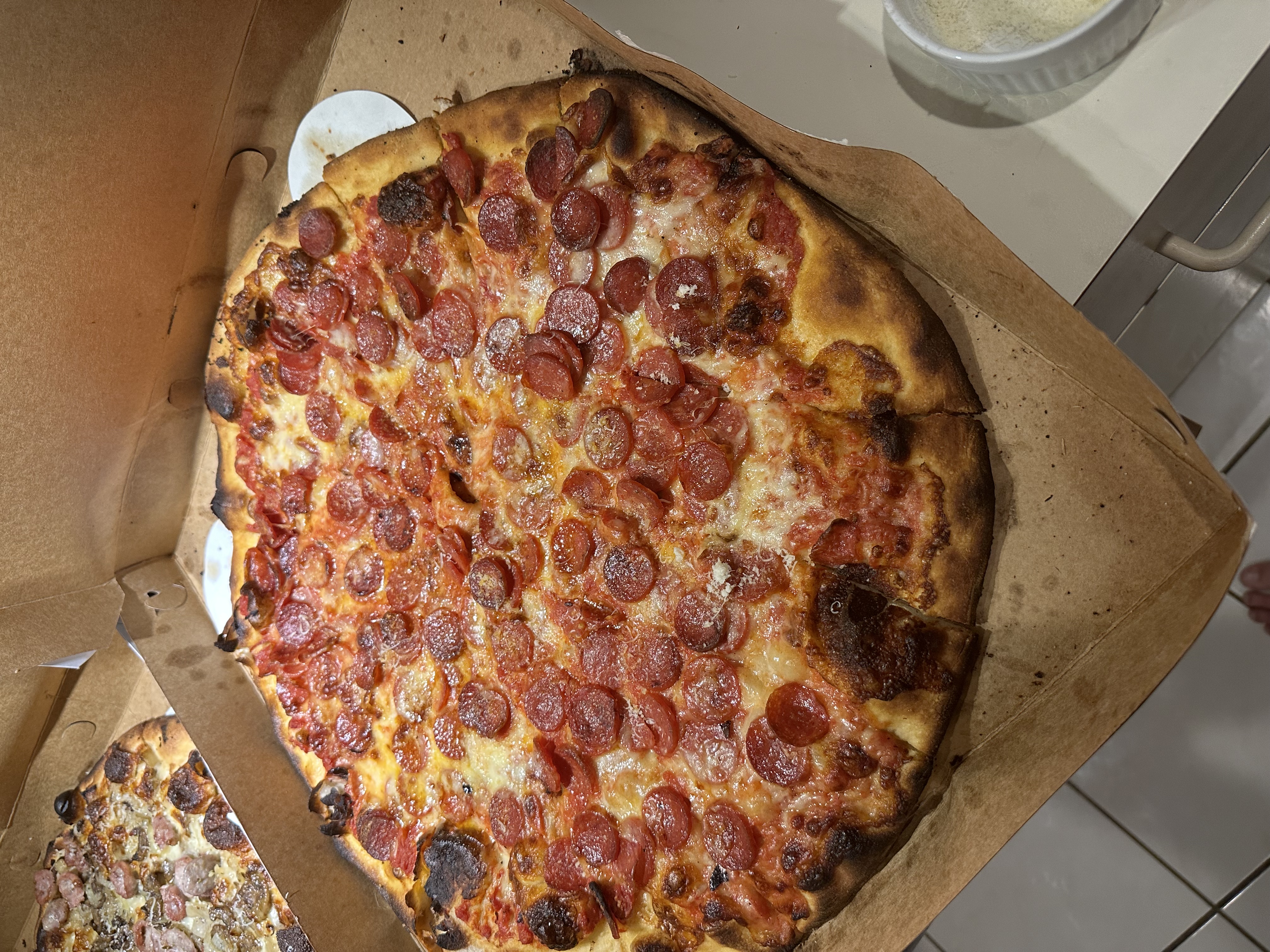
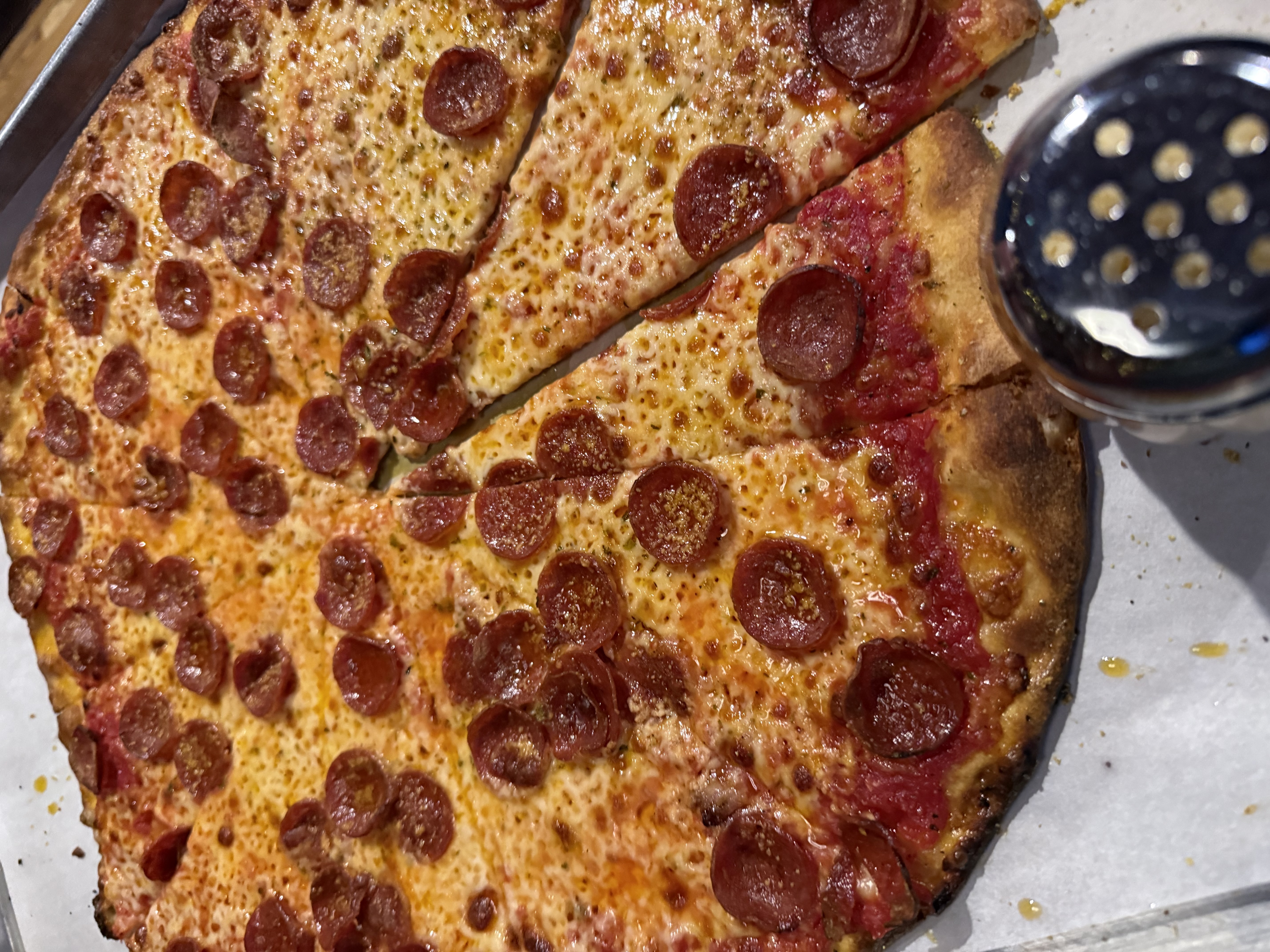
While Piece and Pepe's are very different from each other, they share the same characteristics: a thin, charred crust with a narrow edge that's much crunchier and more flavorful than a typical New York slice.
In New Haven, the style is known as apizza (pronounced "ah-beets"). It's traditionally cut into irregular, uneven slices — no two pieces the same size — sometimes called a "party cut."
The traditional New Haven institutions — Frank Pepe's and Sally's — both use coal-fired ovens, and it's part of their identity. But coal isn't what defines the style. Modern Apizza and Nolo in New Haven use wood-fired ovens. Zuppardi's in neighboring West Haven doesn't use coal. And Piece in Chicago, one of my all-time favorites, runs a conventional gas oven. The oven adds character, but the style is really defined by the dough, a hot bake, and restraint with toppings. You can absolutely make this at home.
At 67–69% hydration, this dough is significantly wetter than the New Haven / New York hybrid. That extra moisture is what lets it stretch so thin and develop those characteristic dark spots and crunch, but it also means it's more prone to tearing and sticks to the peel faster. This recipe uses 67% as the baseline — I typically nudge it up to 68–69% in warmer weather when the dough tends to loosen faster. If you're newer to high-hydration dough, I'd start with the hybrid and work up to this one. It takes practice, but it's worth it.
Flour-wise, this is simpler than the hybrid — just bread flour. You can substitute up to 10% whole wheat, spelt, or AP, though this isn't traditional at all. That said, it adds more flavor to the crust, and if you're going the sourdough route, it gives the fermentation a bit of extra help.
A poolish is optional. If you want to use one, follow the same approach as the hybrid post using a 100% hydration poolish (equal parts flour and water), and subtract those amounts from the totals below. For most bakes I skip it.
| Ingredient | Amount |
|---|---|
| Bread flour (or up to 10% spelt, wheat, or AP) | 906g |
| Water, 90–100°F (67% hydration) | 606g |
| Salt | 21g |
| Active dry yeast | 0.45–0.91g |
| Or ripe sourdough starter | 90g |
Pull the dough out 1–2 hours before baking and let it come to room temperature. Flour your work surface generously — I use a 60:40 mix of semolina and all-purpose, same as on the peel.
Shape with your fingers only. Unlike most doughs, you don't want to build a raised edge — the sauce goes nearly all the way to the rim. Start at the outer edge and push down and outward, rotating as you go. Don't stretch from the center and don't toss it. Work slowly and the dough will get there. Once it's stretched, move it onto the peel quickly and top without delay. For a good visual on the technique, this section of part 2 of the video series (also linked below) is a helpful reference.
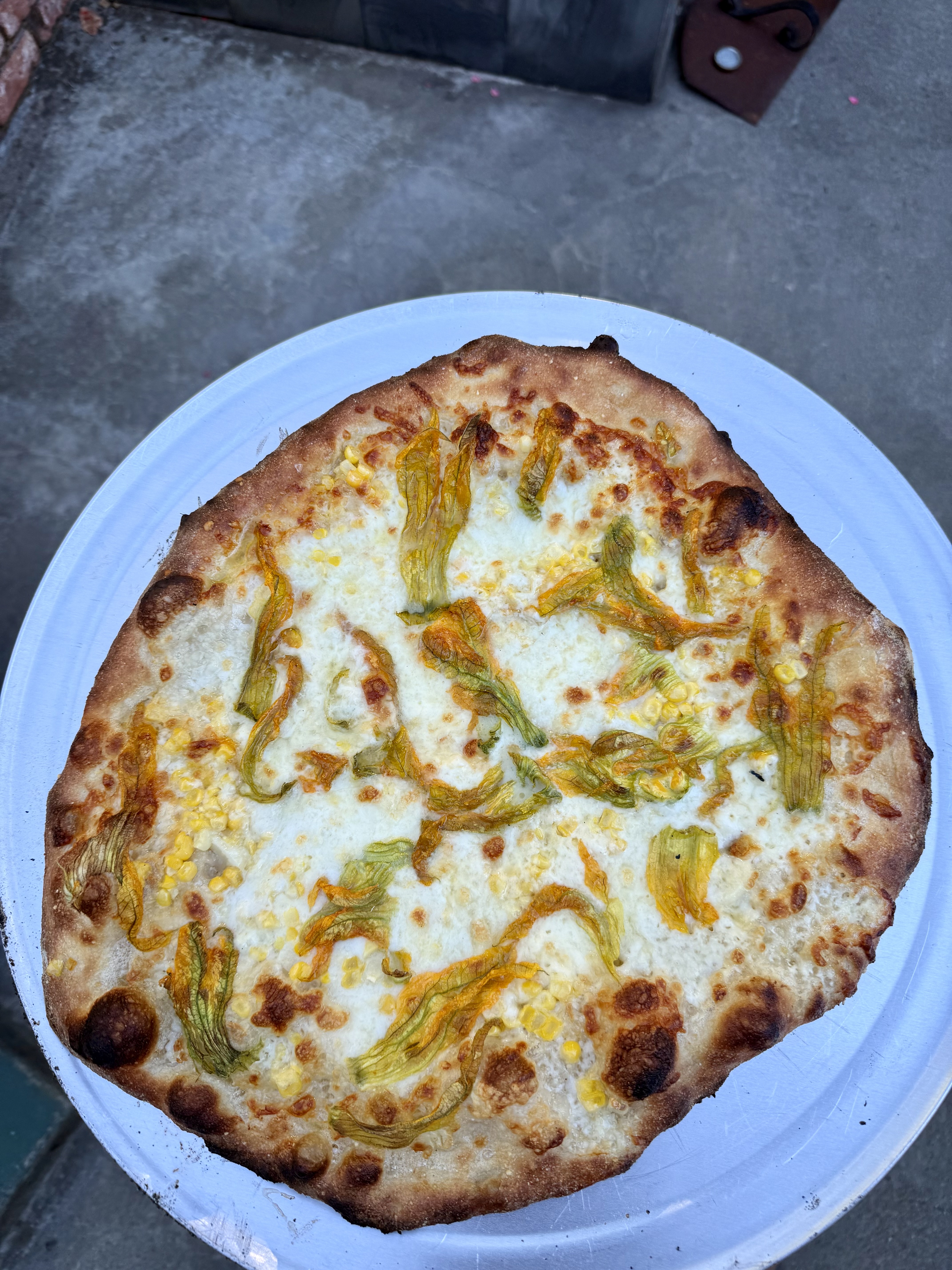
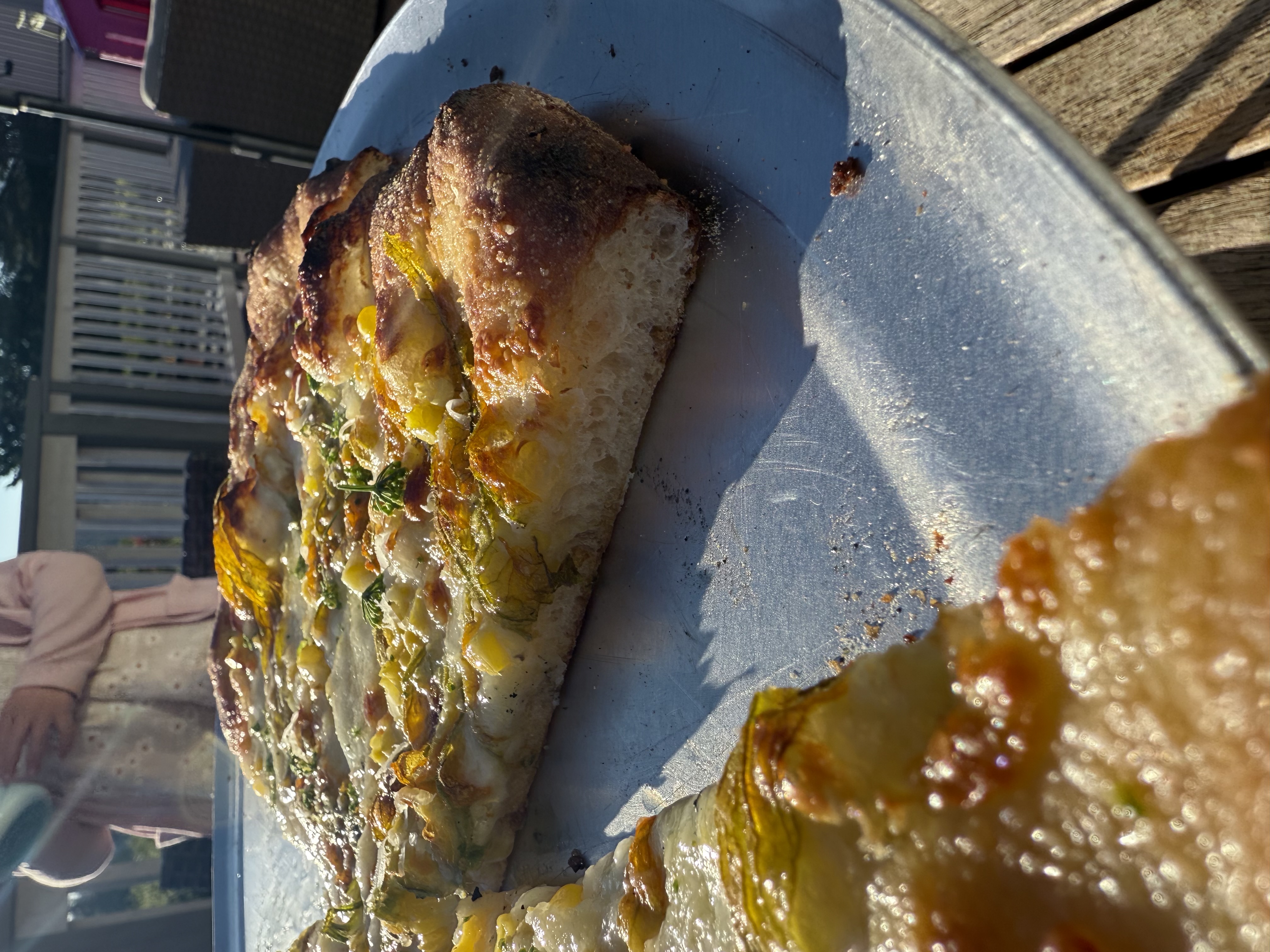
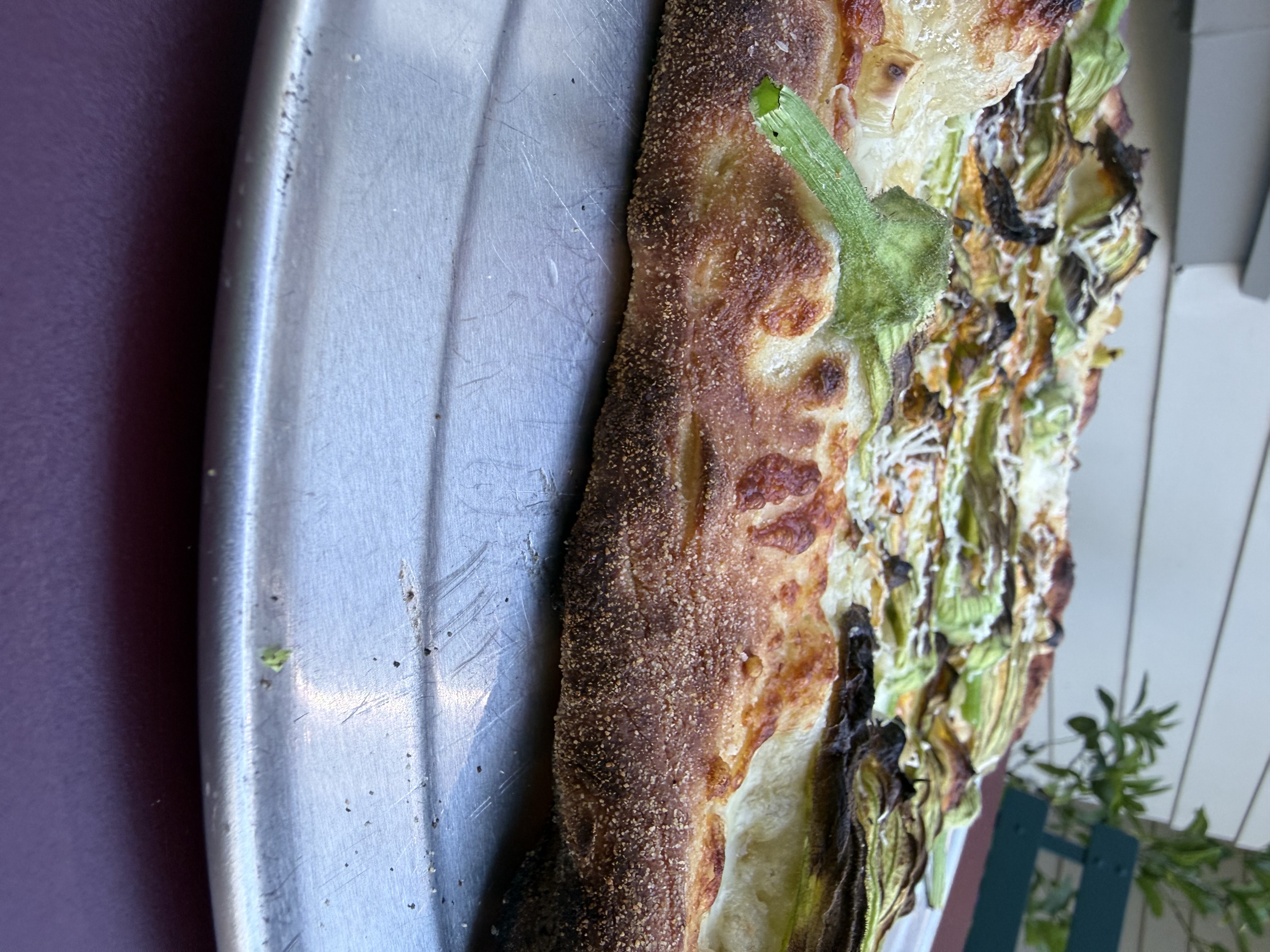
The sauce is uncooked and minimal. Crush Bianco di Napoli whole peeled tomatoes by hand, add a small clove of minced garlic, a pinch of salt, and a few fresh basil leaves. That's it. Stanislaus Alta Cucina is also excellent if you can get a #10 can (restaurant supply, but available on Amazon).
Spread the sauce close to the edge. For cheese, I use low-moisture whole milk mozzarella — Grande is my preference, Tillamook is a solid and more accessible option. Around 6–8oz per pizza is plenty; too much and the pie gets soggy and you lose the crunch. You want patches of exposed sauce, not full coverage. Always finish with freshly grated pecorino romano and a drizzle of olive oil before it goes in. Keep toppings light overall — this is a thin pizza and it shows under too much weight.
The tomato pie skips the mozzarella entirely — just sauce, pecorino, and olive oil. It sounds sparse but it's one of the best things you can put in a pizza oven.
The white clam is Pepe's most iconic pie and the one most people make the trip for: littleneck clams, olive oil, garlic, oregano, and pecorino — no sauce, no mozzarella. I like to add a little cheese and sometimes bacon, the way Piece does it. Probably sacrilegious to Italians, which I am not.
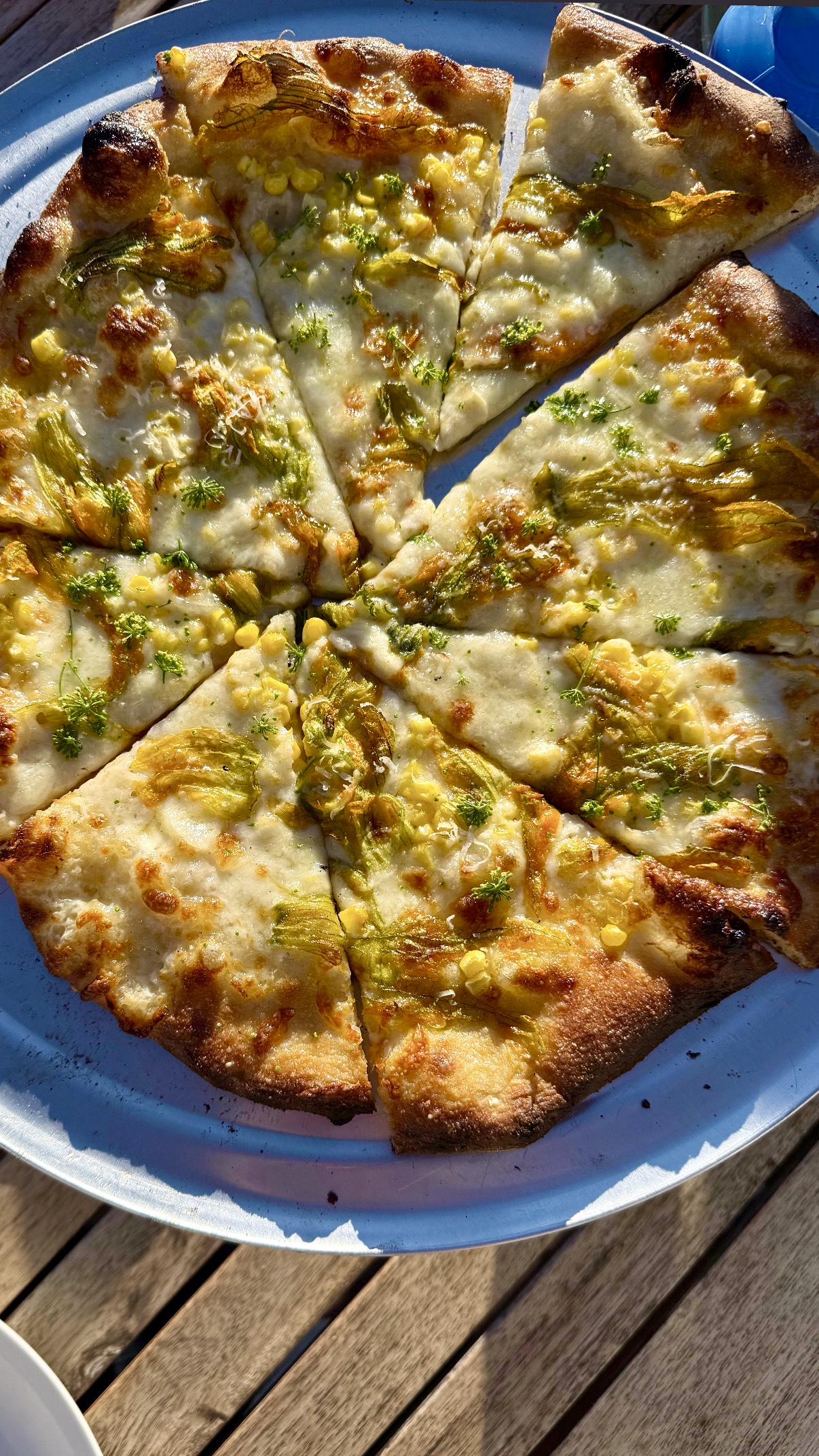
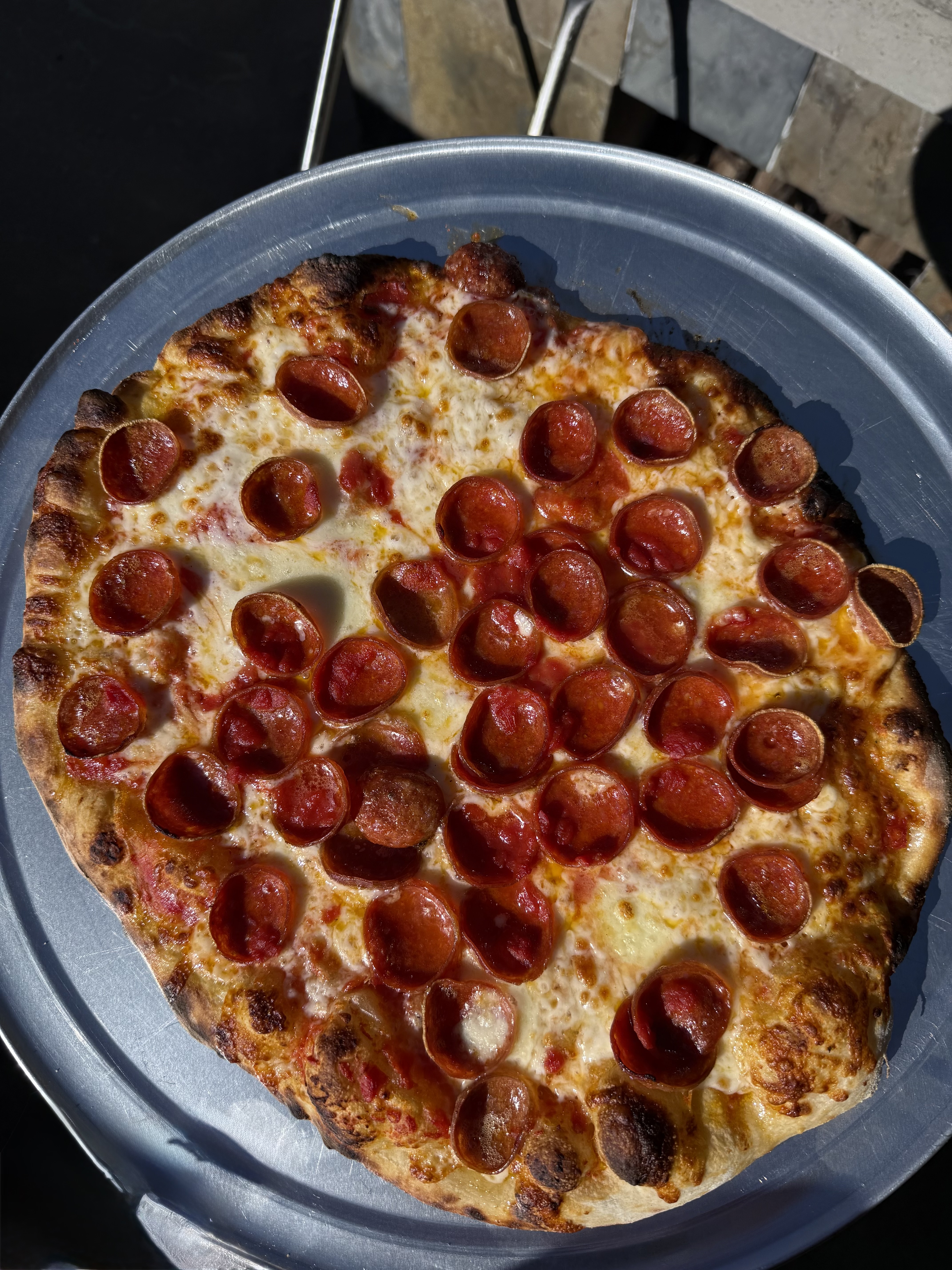
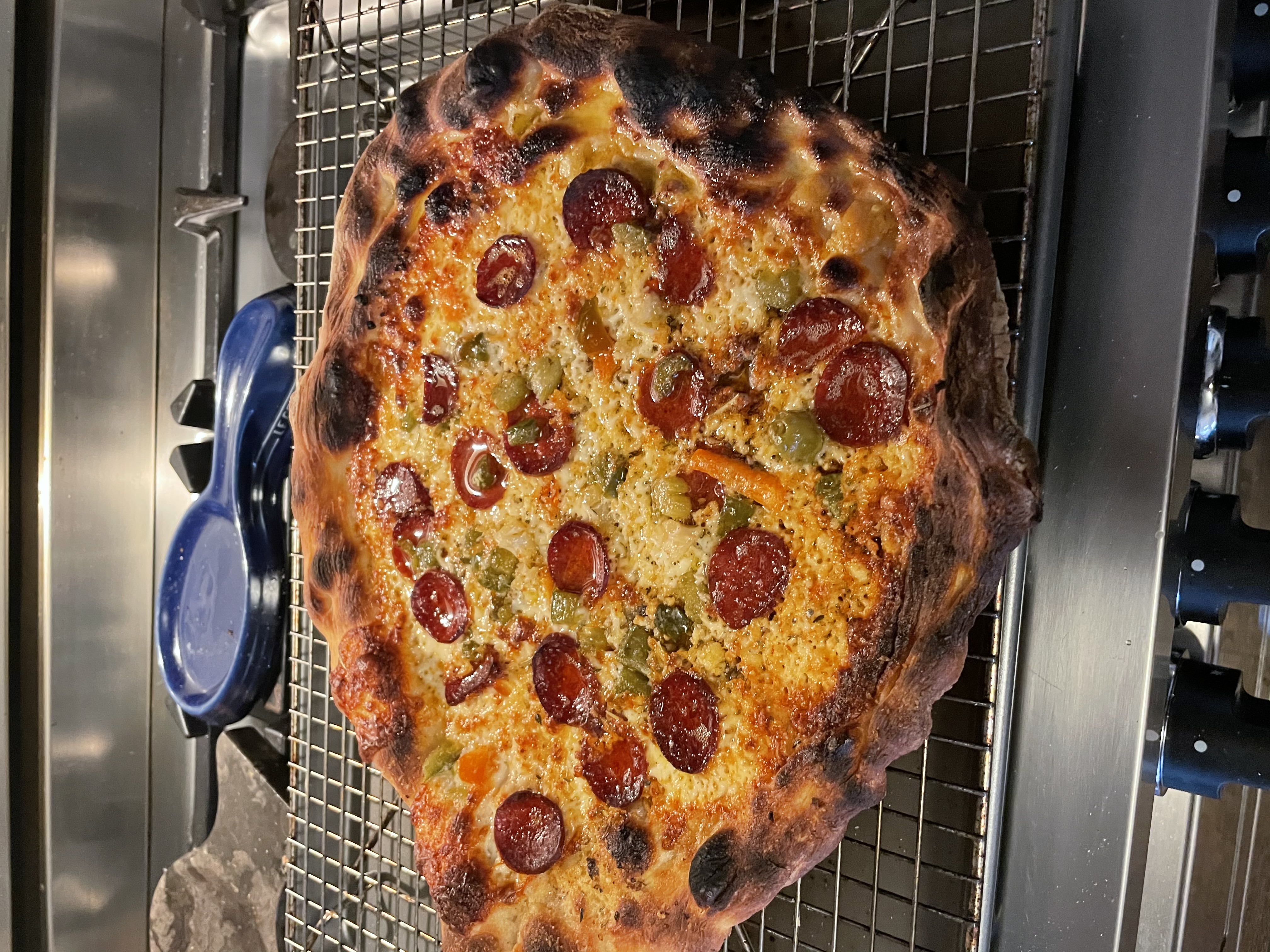
Same setup as the New Haven / New York hybrid post — pizza oven or home oven cranked as high as it'll go with a steel or stone. For this style, 650°F is the minimum in a pizza oven; hotter is better. Plan for 4–6 minutes, rotating as needed. In a home oven at 500–550°F, expect 5–8 minutes. The pizza is done when the crust is deeply charred in spots and the cheese is bubbling and lightly browned.
These videos differ from my recipe but are a great breakdown of the style and technique — especially useful for seeing how to shape and bake at home.